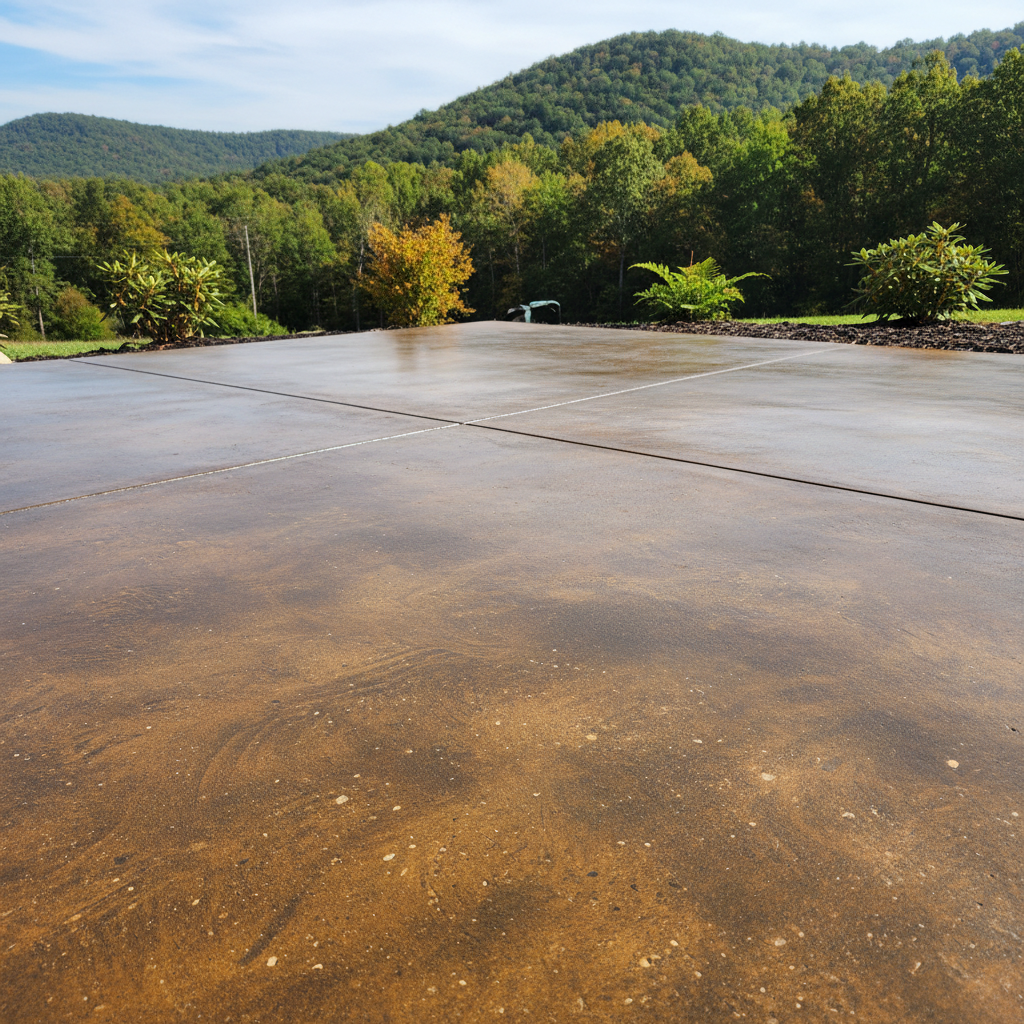
What's the difference between concrete stain and concrete paint?
This is probably the most common question I get, and it's a big one because they're really different beasts. Concrete paint, well, it just sits on top of the concrete, like any other paint. It forms a solid layer, and that means it can chip, peel, or wear away over time, especially in busy spots or when it faces our tough Cedar Grove winters. You've definitely seen it – that peeling mess on a porch or garage floor. Paint covers up the concrete entirely, end of story.
Stain, on the other hand? It's not a coating at all. It actually soaks into the concrete's surface and reacts with its minerals, especially the lime content. This reaction creates a translucent, permanent color that becomes part of the concrete itself. Since it's not just sitting on top, it won't chip or peel like paint. It lets the concrete's natural variations and textures show through, giving it a much more natural, earthy look. Think of it like wood stain – it enhances the grain, it doesn't hide it.
Can I stain my existing concrete, or does it need to be new?
You can absolutely stain existing concrete; that's a huge part of its appeal, honestly. You don't always need to pour new stuff just to get a fresh look. The main thing is the condition of your existing concrete. It needs to be clean, dry, and totally free of any sealers, paints, glues, or grease. Any contaminants will stop the stain from soaking in evenly, and you'll end up with splotchy results. If you've got old paint or a sealer on there, it's gotta come off. That usually means grinding or chemical stripping, which can be a real chore. Cracks and major repairs also need to be fixed before staining, because the stain will highlight those repairs, not hide them. But if your concrete is in pretty good shape, just dull or discolored? Staining is a fantastic option.
What kind of look can I expect from concrete staining?
This isn't like picking a paint chip and expecting that exact color, you know? Because stain reacts with the concrete itself, the final color is influenced by the concrete's age, how porous it is, and its chemical makeup. You'll get variations in tone and intensity, which is exactly what gives stained concrete its unique, mottled, often stone-like appearance. Acid stains tend to produce more translucent, variegated, earthy tones – browns, tans, greens, and blues. Water-based stains offer a wider range of colors, including brighter ones, and can be more uniform, but they still let some of the concrete's character peek through. It's never a perfectly uniform, opaque color. That's the beauty of it – it's organic, not artificial. We always recommend doing a test patch in an inconspicuous area if you're really particular about the shade.
Is stained concrete slippery, especially when wet?
That's a common concern, especially for outdoor areas like patios or walkways around here where we get plenty of rain and even some icy patches near the river. Stained concrete itself isn't inherently more slippery than unsealed concrete. The slipperiness actually comes from the sealer that's applied afterward to protect the stain and the concrete. If you use a high-gloss sealer, it can definitely become slick when wet. For outdoor applications, or anywhere slip resistance is a concern, we always recommend adding an anti-slip additive to the final sealer coat. These are usually fine, clear grit materials that create a textured surface without changing the look of the stain. It's a small step that makes a big difference in safety.
How long does stained concrete last, and what's the maintenance like?
One of the best things about stained concrete is how durable it is. Since the color is actually part of the concrete, it won't fade, chip, or peel like paint. The stain itself can last for decades. The lifespan really depends on the sealer you use and how well you take care of it. For interior floors, a good quality sealer might last 5-10 years before needing a re-coat, depending on foot traffic. For exterior surfaces, especially with our freeze-thaw cycles and sun exposure, you might need to re-seal every 2-5 years. Maintenance is pretty simple: regular sweeping or vacuuming, and damp mopping with a mild, pH-neutral cleaner. Avoid harsh chemicals or abrasive cleaners, as they can degrade the sealer. If you see the sealer starting to dull or wear thin, that's your sign it's time for a fresh coat. It's much easier to re-seal than to re-stain, trust me.
Can I stain my garage floor or driveway?
Absolutely, you can stain both, but there are a few extra things to think about. Garage floors see a lot of abuse – hot tires, oil spills, chemical drips, heavy vehicles. For these areas, you'll need a very durable, chemical-resistant sealer, often an epoxy or polyaspartic coating, right over the stain. This provides the necessary protection against all that wear and tear. Driveways are similar; they need a tough sealer to stand up to vehicle traffic, UV exposure, and weather. Also, for driveways, you'll want to make sure the concrete itself is in excellent structural condition, as staining won't fix underlying issues. Guardian Concrete always makes sure we're using the right products for these high-stress areas so you get a finish that lasts.
Is it a DIY project, or should I hire a pro?
Look, I'm a contractor, so you might think I'd just say 'hire a pro' every time. But honestly, some smaller, less critical staining projects *can* be tackled by a determined DIYer. If you're staining a small, interior concrete slab that's in perfect condition, and you're comfortable with meticulous cleaning, precise application, and working with chemicals, you might be able to pull it off. However, staining is a lot more art than science. Getting an even, consistent look, especially with acid stains, takes experience. Prepping the surface correctly is critical and often the hardest part. If you have a large area, complex patterns, or if the concrete isn't in ideal shape, I'd strongly recommend calling in a professional. We've got the specialized equipment for cleaning and prep, the right applicators, and the know-how to troubleshoot issues. It's easy to end up with an uneven, splotchy, or poorly sealed job that costs more to fix than it would have to do right the first time.
Does concrete staining increase my home's value?
That's a good question, and the answer is usually yes, but it really depends on the quality of the work and the area. A well-done stained concrete floor or patio can significantly enhance your home's aesthetic appeal, making it look more custom and high-end. It's durable, low-maintenance, and unique, which are all attractive qualities to potential buyers. Compared to plain, gray concrete, a beautifully stained surface definitely adds a touch of class and character. It shows that you've invested in your home's appearance and functionality. It's not just about covering up concrete; it's about transforming it into a design feature. Think about a nice, warm stained floor in a basement or a welcoming patio – that's a definite upgrade.